
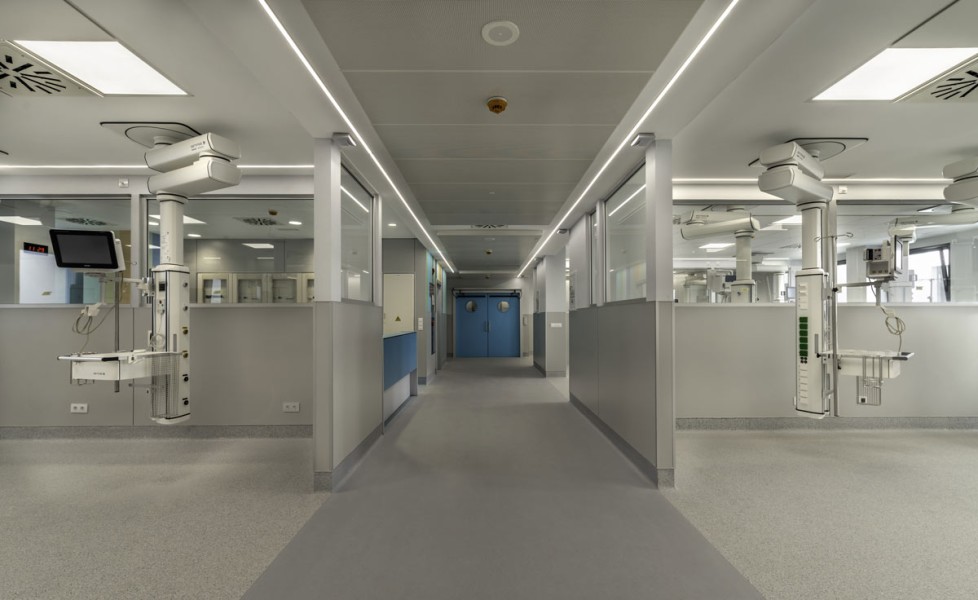
The Fusion that Transforms Healthcare: Technology and Healthcare Architecture

At the intersection of innovation and healthcare, a paradigm shift is underway as the worlds of technology and hospital architecture. As society moves into the digital age, the convergence of these two areas is redefining how healthcare spaces are experienced, improving efficiency, quality, and accessibility to services. In our experience, hospitals and medical centers, once considered merely as containers of activity, are evolving into digital environments that meet the changing needs of patients and healthcare workers. 

Towards total digitization

The digitization of healthcare is fostering the creation of interconnected environmentsFor example, electronic health record systems allow instant access to patient histories, facilitating the coordination and monitoring of care. Furthermore, technology is advancing telemedicine, opening the door to virtual medical consultations and allowing patients to access care from the comfort of their homes. Robotics no longer belongs solely to the world of science fiction and is finding a place in modern healthcare architecture. Operating rooms equipped with surgical robots They are revolutionizing medical procedures, enabling unprecedented precision and efficiency. Furthermore, assistive robots/automatons are playing a vital role in patient care, helping with tasks ranging from transport to vital sign monitoring. Technology is empowering architectural design through data scienceCollecting and analyzing data on patient flow, traffic patterns, and space requirements allows architects to create healthcare spaces optimized for efficiency and comfort. This leads to an improved experience for both patients and staff.

Accompanying in a sustainable way

Much-needed sustainability is also at the heart of the transformation of healthcare architecture. Healthcare buildings are adopting eco-friendly technologiessuch as renewable energy systems and advanced waste management. Integrating these solutions not only reduces environmental impact but can also lead to lower long-term operating costs. At Argola Arquitectos, we have been working in this direction for some time. If you would like to learn more about any of these initiatives, please contact us Click here

The growth of telemedicine

Telemedicine is emerging as a fundamental pillar in the design of the healthcare architecture of the future. Healthcare spaces are being adapted to accommodate the delivery of virtual consultationsallowing wider access and convenient to medical care. This not only It reduces the need for physical spacebut it can also improve the overall patient experience. The monitoring devices At home, these devices allow for constant monitoring of individual health and seamless communication with doctors. This shift toward personalized, technology-based care is streamlining the doctor-patient relationship. Ultimately, advanced health technology is driving a radical transformation in healthcare architecture, turning healthcare buildings into digital ecosystems that promote efficiency, comfort, and sustainability. As we move into the future, the collaboration between technology and architecture will continue to define how we experience healthcare, delivering more personalized and effective care for everyone.